

Is Your Ductwork Making You Sneeze? Signs of Poor IAQ
Do you find yourself sneezing the moment your heating or air conditioning kicks on? Are your eyes watery, or do you wake up every morning with a scratchy throat and a stuffed-up nose? When these symptoms happen inside your home, it is easy to blame seasonal allergies or a lingering cold. However, the real culprit might be hidden right above your head or beneath your floors.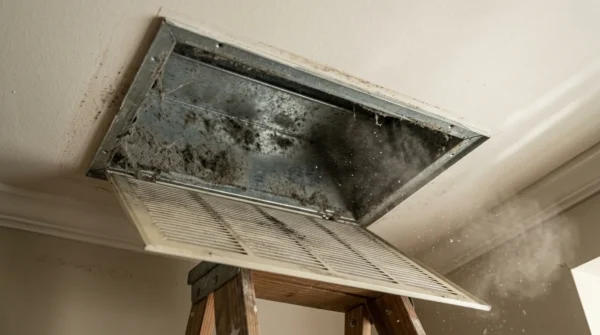
Your residential ductwork acts as the respiratory system of your home. It circulates the air you breathe multiple times every single day. If that network of ducts contains years of accumulated dust, pet dander, pollen, and biological growth, it actively distributes those contaminants into every room.
Understanding the critical link between your home’s air distribution network and your respiratory health is the first step toward relief. In this comprehensive guide, we will explore how compromised ductwork degrades your indoor air quality. Furthermore, we will highlight the primary poor IAQ signs you need to look out for to protect your family’s well-being.
The Critical Connection: Ductwork and Respiratory Health
To understand how indoor air quality impacts your lungs, you must first look at how much air your HVAC system actually moves. In a typical single-family home, the blower fan pulls air through the return vents, conditions it, and pushes it back out through supply registers. This cycle happens continuously whenever your system runs. 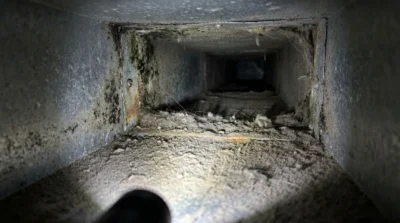
How Dusty Ducts Irritate Your Lungs
If your ducts are clean, this process keeps your home comfortable and relatively free of large airborne debris. But over time, ductwork accumulates a thick layer of fine particulate matter. When the powerful blower fan turns on, it creates a sudden blast of air that dislodges these settled particles. Consequently, the system sends a microscopic cloud of irritants directly into your living spaces.
For individuals with perfectly healthy respiratory systems, consistent exposure to this dirty air causes mild irritation. But for vulnerable populations, the consequences can be much more severe. This includes young children, the elderly, or those living with pre-existing conditions like asthma, chronic obstructive pulmonary disease (COPD), or environmental allergies.
The Long-Term Health Impact
Breathing in polluted indoor air causes immediate mechanical irritation to the delicate lining of your nose, throat, and lungs. Over time, this constant exposure triggers systemic inflammation. As a result, your respiratory system becomes hyper-reactive to other common triggers. Your home should be a sanctuary where your lungs can rest and recover, not an environment that keeps your immune system on high alert.
Common Contaminants Hiding in Your Ducts
Your HVAC system naturally collects whatever particles are floating around in your air. Because ductwork is dark, climate-controlled, and mostly undisturbed, it serves as the perfect collection chamber for a wide variety of respiratory irritants.
Dust Mites and Fine Particulates
Dust isn’t just unsightly; it is a complex mixture of dead skin cells, clothing fibers, soil, and decomposed insect matter. Dust mites thrive in these dark environments because they feed on skin cells. Their waste products are among the most potent allergens known to medicine. Therefore, they are highly capable of triggering severe asthma attacks and chronic sneezing fits.
Pet Dander Challenges
If you have furry family members, pet dander inevitably circulates through your home. Because dander is incredibly light and sticky, it easily bypasses standard, low-efficiency fiberglass air filters. It then settles deep inside your return ducts. Every time the system runs, the airflow re-suspends that dander into the air, causing pet allergies to flare up even if your pets are in another room.
Biological Growth and Spores
Your air conditioning system removes moisture from the air as it cools. However, if your system has poor drainage, leaky ducts, or high indoor humidity, moisture will accumulate inside the ductwork. Dark, damp metal or fiberglass-lined ducts are highly susceptible to biological growth. Once colonies establish themselves, they release thousands of airborne spores into the air stream, leading to chronic respiratory irritation and coughing.
Pollen Transport
Whenever doors and windows open, outdoor pollen sticks to your clothes and hair. Eventually, it ends up in your indoor air. Your HVAC system draws this pollen into the ductwork. While outdoor pollen seasons naturally end, pollen trapped within dirty ducts can continue to circulate. Therefore, it triggers allergic reactions months after the plants outside have stopped blooming.
Red Flags: Primary Poor IAQ Signs in Your Home
Because your ductwork is hidden behind drywall and ceilings, you cannot easily look inside to see if it is dirty. Instead, you have to rely on contextual clues. Recognizing the primary poor IAQ signs around your living space can help you identify a problem before it escalates into a serious health concern. 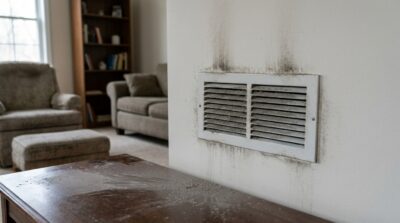
1. Frequent, Unexplained Sneezing and Respiratory Flare-ups
If your allergy symptoms seem to peak when you are sitting indoors, pay close attention. Sneezing, coughing, wheezing, and a persistent runny nose that improve when you leave the house are classic poor IAQ signs. If your symptoms get noticeably worse shortly after you hear your furnace or air conditioner kick on, your ductwork is likely delivering a concentrated dose of allergens straight to your breathing zone. This constant exposure is a major reason why many families invest in dedicated indoor air quality solutions to filter out fine micro-particles.
2. Rapid Dust Accumulation on Surfaces
Do you find yourself wiping down furniture and electronics, only to notice a fresh layer of grey powder settling on them just a day or two later? While some household dust is normal, accelerated dust accumulation indicates that your HVAC system is simply recycling debris rather than capturing it. This cycle happens when the ductwork itself is heavily loaded with dust, or if structural breaks in the ducts are pulling in dirty air from unfinished attics, crawlspaces, or wall cavities.
3. Visible Debris and Discoloration Around Vents
Take a close look at your supply registers and return grilles. Do you see dark, fuzzy streaks on the ceiling or walls surrounding the vents? Are the metal louvers covered in a thick blanket of web-like dust? These visible accumulations indicate that the air passing through the vent is heavily laden with particulate matter. What is sticking to the outside of the vent is only a tiny fraction of what is trapped inside, which is why scheduling a professional air duct cleaning is essential to safely eliminate the root source of the buildup.
4. Musty, Stale, or Unusual Odors
When you step through your front door after being outside for a few hours, what does your home smell like? A damp, earthy, or musty odor that lingers despite cleaning is a strong indicator of environmental issues within your air distribution system. When moisture mixes with organic dust inside dark ductwork, it creates a stagnant environment that generates these distinct, unpleasant odors every time air moves through the system.
5. Inconsistent Airflow and Temperature Imbalances
While this sounds like a mechanical issue rather than an air quality problem, they are deeply intertwined. If one bedroom feels significantly stuffier or hotter than the rest of the house, it often points to a collapsed, restricted, or heavily clogged duct. Restricted airflow prevents fresh, conditioned air from properly ventilating the room, leading to stagnant air pockets where indoor pollutants concentrate to hazardous levels. If you notice these comfort imbalances alongside your allergy symptoms, a comprehensive HVAC maintenance and evaluation can uncover structural airflow restrictions before they cause total system strain.
How Damaged Ducts Compromise Your Air
It is a common misconception that ductwork is a permanent, indestructible set of metal pipes. In reality, residential duct systems—especially those utilizing flexible ducting or fiberglass duct board—are prone to physical degradation over time. Understanding how duct failure directly affects your breathing air highlights why proper maintenance is crucial.
The Danger of Duct Leaks and Physical Breaks
According to industry studies, the average home loses roughly 20% to 30% of its air to leaks, loose connections, and poor seals. When a supply duct leaks, you waste energy by heating or cooling spaces like attics or crawlspaces. However, when a return duct has a leak, it creates a powerful vacuum. Consequently, it actively sucks raw, unconditioned, and unmanaged air into your breathing stream.
If your return ducts run through an uninsulated attic, a musty crawlspace, or a dusty basement, a single detached joint can pull in dangerous particles. For example, it can pull in fiberglass insulation fibers, which severely irritate the lungs. Furthermore, it can introduce fine concrete dust, outdoor soil, and pest debris. Once these elements enter the system, they bypass your main air filter if the leak occurs after the filter slot.
The Role of System Age and Neglect
As an HVAC system ages, mechanical components become significantly less efficient. Simultaneously, biological residues build up on internal components. If a system goes years without a professional evaluation, the internal evaporator coils can become impacted with thick dirt. This restricts vital airflow and creates a damp breeding ground for biological matter right in the path of your indoor air supply. If your system is old or showing mechanical stress alongside poor IAQ, it might be time to look into an efficient air conditioning installation or a comprehensive heating replacement to ensure clean, reliable climate control.
Practical Action Steps for Better Indoor Air Quality
If you recognize these poor IAQ signs in your own home, you do not have to live with the discomfort. Fortunately, there are immediate, practical steps you can take to reclaim control over your indoor environment and breathe easier. 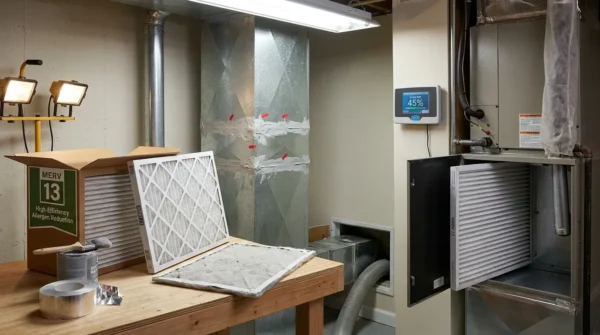
Upgrade Your Air Filters
The basic fiberglass filters found in most home improvement stores are designed solely to protect the HVAC equipment from large debris. They do virtually nothing to improve your respiratory health. Therefore, you should consider upgrading to a pleated filter with a higher Minimum Efficiency Reporting Value (MERV) rating.
For standard residential systems, a MERV 11 or MERV 13 filter balances excellent filtration efficiency with appropriate system airflow. These higher-efficiency filters are dense enough to trap microscopic particles, including pollen, pet dander, mold spores, and even certain bacteria. By using them, you prevent these irritants from entering your duct network in the first place.
Seal and Repair Your Duct System
Professional duct sealing is one of the most effective ways to stop poor-quality air from infiltrating your living spaces. Using specialized testing equipment, HVAC technicians can pressurize your system to identify hidden leaks behind walls or in attics. Sealing these gaps with high-durability mastic paste ensures that your system only draws clean, filtered air from inside your home.
Schedule a Comprehensive Professional HVAC Inspection
While DIY maintenance like vacuuming vent covers helps surface appearance, it cannot address the deep internal channels of your home’s ductwork. A comprehensive professional inspection evaluates your entire system, including your duct structural integrity, evaporator coils, drip pans, and filtration setups. If a technician finds that your system is heavily contaminated, they can use specialized negative-pressure vacuums and rotating brushes. This safely removes decades of accumulated debris without releasing it into your home.
Optimize Indoor Humidity Levels
Managing the moisture content of your indoor air is critical for controlling biological irritants and dust mite populations. Dust mites thrive in environments where relative humidity exceeds 60%. Conversely, air that is too dry can irritate your nasal passages and throat, making you more susceptible to airborne infections and allergens.
Therefore, you should aim to keep your home’s relative humidity between 30% and 50%. If your home is naturally humid, a whole-home dehumidifier integrated into your central HVAC system can automatically maintain an ideal balance.
Prioritize Your Respiratory Well-Being
Your home is where you spend the vast majority of your life. If your indoor environment is filled with hidden triggers that make you sneeze, cough, or feel fatigued, it places a constant, unnecessary tax on your physical health.
By staying vigilant against common poor IAQ signs—from rapid dust buildup and persistent musty smells to unexplained morning congestion—you can take a proactive approach to your home’s wellness. Investing in your indoor air quality does more than just stop a temporary sneezing fit. Ultimately, it creates a clean, comfortable environment where your family can thrive, grow, and breathe safely for years to come.
If you suspect your home’s ductwork is contributing to respiratory discomfort, do not wait for the symptoms to worsen. Reach out to the certified indoor air comfort specialists at Climate Care today. Our dedicated team can evaluate your current system setup, identify hidden duct leaks, and implement tailored filtration and air purification solutions to restore the health and safety of your home’s air.