

Spring AC Checklist for Fairfield County Homeowners
 As the salt from the coastal breeze begins to settle and the first blooms appear in gardens from Greenwich to Stratford, homeowners in Fairfield County understand that spring is a fleeting, beautiful bridge to the humid intensity of a New England summer. While the focus often turns to landscaping and exterior power washing, securing expert air conditioning services before the first heatwave is a critical mechanical transition happening within the walls of your home. Your cooling system has likely sat dormant since the previous September, and jumping straight into a high-demand July heatwave without a proper transition is a recipe for system strain or an expensive mid-season breakdown. Preparing your air conditioning system during the mild days of April and May is not just about comfort; it is a strategic move to preserve your equipment’s lifespan and keep your utility bills from spiking alongside the temperature.
The Importance of the Outdoor Perimeter
The journey toward a reliable cooling season starts in your yard. During a typical Fairfield County winter, the outdoor condenser unit is subjected to heavy snow, ice, and wind-driven debris. Even if you used a breathable cover, small twigs, dried leaves, and even road salt can infiltrate the delicate aluminum fins of the unit. Your first task is to establish a clear zone around the condenser. Aim for at least two feet of open space in every direction. This isn’t just for aesthetics; your air conditioner operates by pulling air through those side fins to release the heat it has gathered from inside your home. When shrubs are overgrown or bags of mulch are stacked against the unit, the system cannot “breathe.” This lack of airflow causes the compressor to work significantly harder, which generates excess heat and eventually leads to premature mechanical failure.
While you are clearing the area, take a moment to inspect the base or pad on which the unit sits. The shifting freeze-thaw cycles common in Connecticut can cause the ground to settle unevenly. If the condenser is leaning, it can put stress on the copper refrigerant lines and cause the oil in the compressor to distribute unevenly. A simple visual check to ensure the unit is level can prevent a host of vibration-related issues later in the summer. Once the area is clear and the unit is level, a gentle rinse with a garden hose—using low pressure—can help wash away the fine dust and pollen that has accumulated on the coils. Avoid using a power washer, as the high-pressure stream can easily bend the fragile fins and permanently restrict airflow.
Indoor Filtration and Airflow Management
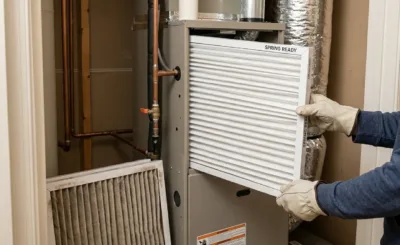 Transitioning to the interior of your home, the most impactful action a homeowner can take is a thorough audit of the air filtration system. During the winter heating months, your furnace or air handler has been working overtime, and the filter has likely captured a significant amount of household dust and pet dander. Starting the cooling season with a dirty filter is akin to trying to run a marathon while breathing through a straw. It forces the blower motor to pull harder, increasing your electricity consumption and potentially causing the evaporator coil to freeze over. In Fairfield County, where spring allergies can be particularly aggressive due to the high density of oak and maple trees, upgrading to a high-efficiency pleated filter can also significantly assist in improving your indoor air quality by trapping fine pollen particles before they circulate through your living spaces.
Beyond the filter itself, you should perform a walkthrough of every room to inspect the supply and return vents. It is common for furniture to be rearranged during the winter, sometimes inadvertently blocking the very registers your AC needs to distribute cool air. Ensure that curtains, rugs, and large pieces of furniture are at least several inches away from all vents. There is a common misconception that closing vents in unused rooms saves money; in reality, modern HVAC systems are designed to operate with a specific amount of “static pressure.” Closing vents disrupts this balance and can actually cause the system to work harder or develop leaks in the ductwork due to the increased pressure. Keep all interior doors open when possible to allow for natural air circulation, which helps the thermostat get a more accurate reading of the home’s overall temperature.
Calibrating the Command Center
 Your thermostat acts as the brain of your cooling system, and spring is the ideal time to ensure it is communicating correctly with the hardware. If your thermostat runs on batteries, replace them now, even if the “low battery” light hasn’t appeared. A mid-summer failure of a five-dollar battery can lead to an emergency service call when the system refuses to kick on during a 90-degree day. Furthermore, consider the placement and programming of your controls. If you still use a manual slider or a non-programmable unit, upgrading to a smart thermostat can offer significant savings and more precise climate management. In a region like ours, where the temperature might be 50 degrees in the morning and 75 by mid-afternoon, a smart system can automatically adjust to the “sweet spot” where neither heating nor cooling is required, allowing you to take advantage of the natural breeze.
For those already using programmable or smart thermostats, spring is the time to audit your schedules. Your household routine in the spring often differs from the winter, and ensuring that the cooling only ramps up when someone is home can shave 10 to 15 percent off your monthly energy costs. Test the “Cool” mode specifically. Set the temperature a few degrees lower than the current room temperature and wait to hear the click of the relay. If the outdoor unit starts up smoothly and you feel a drop in temperature at the vents within a few minutes, your controls are likely in good health. If there is a long delay or the air remains lukewarm, it may indicate a calibration issue or a problem with the start capacitor in the outdoor unit.
Addressing the Condensate System
A frequently overlooked aspect of air conditioning is its role as a dehumidifier. As the system cools the air, it pulls moisture out, which then collects in a drain pan and exits the home via a condensate drain line. During the months of inactivity, dust and biological growth can create a sludge-like blockage in this narrow pipe. If the line is clogged when you first start the system, that water has nowhere to go but back into your home, often resulting in ceiling stains or flooded basements. You can proactively address this by locating the access point on your indoor drain line and pouring a cup of white vinegar down the pipe. This helps kill any algae or mold that has started to take root. If your system is equipped with a condensate pump, ensure it is plugged in and that the float switch moves freely. A quick test by pouring a little water into the pump reservoir to see if it triggers the motor can save you from a messy surprise later in the season.
Identifying the Need for Professional Intervention
While the steps mentioned above can be handled by most homeowners in an afternoon, there are technical aspects of air conditioning that require the specialized tools and training of a licensed technician. A professional spring tune-up goes deep into the “vital organs” of the system. For instance, checking refrigerant levels is a task that cannot be performed through a visual inspection alone. In Fairfield County, the extreme temperature swings of winter can cause the copper joints and seals to contract, leading to tiny, slow leaks. Operating a system that is low on refrigerant doesn’t just result in poor cooling; it causes the compressor to overheat, which can lead to a total system failure costing thousands of dollars to repair.
Professional technicians also handle the cleaning of the internal evaporator coil, which is often located in a hard-to-reach area of the air handler. Over several years, a fine layer of dust can bypass the filter and coat this coil, acting as an insulator that prevents the refrigerant from absorbing heat effectively. A technician will also tighten electrical connections that may have loosened due to the vibrations of the previous season and measure the “amp draw” of the motors. This measurement is a critical diagnostic tool; if a motor is pulling more electricity than it is rated for, it is a clear sign that the part is nearing the end of its life. Identifying these ‘ghost’ issues in April allows you to schedule a repair on your own terms, which is why many locals opt for comprehensive seasonal maintenance plans to ensure year-round reliability.
Final Readiness and Timing
The best time to perform this checklist is now, before the first true heat spike hits the Connecticut coast. By the time the local news starts talking about the first 85-degree day, HVAC companies in the area will be booked weeks in advance. Testing your system in late April or early May gives you the luxury of time. It allows you to identify if the air is truly cold, if the system is making any unusual grinding or squealing noises, and if the airflow is consistent across all floors of your home. By taking these proactive steps and servicing homes throughout Fairfield County, we ensure that when the humidity of the Sound finally rolls in, your residence remains a sanctuary of cool air.
To ensure your system is ready for the first heatwave, call Climate Care at (203) 354-2020 to speak with an HVAC professional who understands the unique needs of Fairfield County homes.