

The Homeowner’s Guide to SEER2 and AFUE Ratings
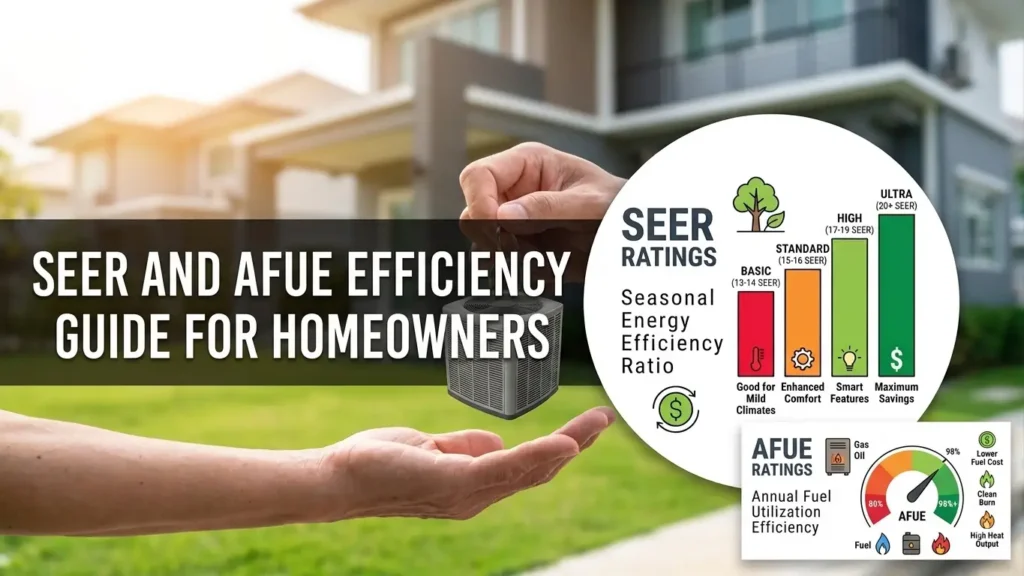
Navigating the world of residential heating and cooling can feel overwhelming when faced with technical acronyms, but understanding SEER2 and AFUE ratings is the most powerful step you can take to control your home’s long-term energy expenditure. For homeowners living in the Northeast, local utility rates are among the highest in the nation. This makes system efficiency a direct financial decision rather than a secondary consideration. When evaluating a new central air conditioner, heat pump, or gas furnace, the efficiency metrics assigned to these systems indicate how effectively they convert electricity or fuel into thermal comfort. By mastering the core concepts behind SEER2 and AFUE ratings, you can calculate real-world operational costs, evaluate prospective equipment quotes intelligently, and choose a high-efficiency system tailored specifically to your residential layout.
Understanding energy efficiency metrics allows you to see past the upfront equipment price tag and look directly at total lifetime ownership costs. A baseline system might seem appealing because of its lower installation cost, but its higher daily energy usage will compound into inflated utility bills month after month. Conversely, investing in premium equipment engineered to maximize SEER2 and AFUE ratings lowers monthly operational expenses while delivering consistent indoor humidity control and balanced temperatures. Before requesting quotes from local HVAC contractors, learning how these ratings are determined, how regional testing protocols shape their performance, and how local utility incentives offset installation costs will put you in complete control of your home investment.
Decoding Cooling Efficiency: What Is SEER2?
The Seasonal Energy Efficiency Ratio 2, universally known as SEER2, is the updated national standard used to measure the total cooling output of a central air conditioner or heat pump during its normal annual usage period divided by the total electrical energy input during that same period. A higher SEER2 number represents a system that delivers greater cooling power using significantly less electrical current. For modern homes, upgrading to a high-efficiency air conditioning installation ensures that every kilowatt-hour of electricity consumed by your outdoor compressor translates into maximum heat removal from your interior living spaces.
The transition from the legacy SEER rating to SEER2 was mandated by the U.S. Department of Energy to provide consumers with realistic efficiency data that reflects real-world operational conditions. Under the older SEER testing procedures, equipment was evaluated under ideal laboratory settings with zero external static pressure. However, real-world homes utilize supply and return ductwork, air filters, and grilles that create natural resistance to airflow. The SEER2 testing standard increases the external static pressure test parameters by a factor of five, simulating the physical resistance found inside actual residential duct networks. As a result, SEER2 ratings reflect true operational efficiency, giving homeowners an honest preview of how equipment will perform once installed in their living space.
In northern climate zones, federal regulations require new central air conditioning systems to meet a minimum threshold of 13.4 SEER2 (which corresponds to the older 14 SEER benchmark). High-efficiency units, however, can reach ratings of 18 to 22+ SEER2. These premium ratings are achieved through advanced variable-speed inverter compressors and multi-stage fan motors. Instead of running at full capacity continuously, variable-speed systems continuously make micro-adjustments to match the precise heat load of your interior spaces. This eliminates energy-wasting cooling cycles, maintains consistent temperatures across multi-level floor plans, and strips excess moisture from humid summer air.
Decoding Heating Efficiency: What Is AFUE?
 While SEER2 measures cooling efficiency, the Annual Fuel Utilization Efficiency rating, or AFUE, measures how efficiently a gas, oil, or propane furnace converts fossil fuel into usable heat for your home over an entire heating season. Expressed as a percentage, AFUE represents the direct ratio of heat output compared to the total energy consumed by the fuel source. For instance, a legacy furnace with an 80% AFUE rating successfully converts 80% of its fuel into thermal energy for your home, while the remaining 20% escapes up the chimney vent as wasted exhaust gas and lost thermal energy.
Upgrading an aging heating system to modern high-efficiency equipment dramatically alters this equation. Standard legacy furnaces installed decades ago often operate between 70% and 80% AFUE, meaning a sizable portion of every utility dollar literally goes up in smoke. Today’s high-efficiency condensing furnaces achieve ratings between 90% and 98% AFUE. These advanced systems incorporate secondary heat exchangers that capture latent heat from exhaust gases before they leave the cabinet, turning previously wasted energy into usable warmth. Selecting a modern furnace with an elevated AFUE rating ensures that nearly every unit of fuel purchased goes directly toward keeping your living spaces warm during freezing winter conditions.
To maximize fuel savings during harsh winter stretches, homeowners should pair precise AFUE calculations with professional furnace installation and comprehensive design. An improperly sized furnace—even one with a 96% AFUE rating—will short-cycle continuously if it is too large for the structure. Short-cycling causes rapid temperature swings, subjects mechanical igniters to severe wear, and negates the natural fuel savings built into high-AFUE equipment. Working with trained technicians who perform detailed load calculations guarantees that your high-efficiency furnace operates at its peak rated AFUE capacity throughout the season.
How SEER2 and AFUE Ratings Impact Monthly Utility Bills
The direct correlation between high efficiency ratings and reduced monthly utility expenses comes down to simple resource management. In regions with elevated electricity rates and fluctuating fuel prices, the financial return on high-efficiency equipment is realized faster than in areas with lower utility costs. When you reduce the total electrical demand of your cooling system or lower the fuel volume needed to heat your home, your monthly utility statement drops accordingly. Over the fifteen to twenty-year operational lifespan of a residential HVAC system, these cumulative monthly savings often offset the initial cost difference of purchasing premium equipment.
To illustrate the financial effect of SEER2 improvements, consider a typical residential property replacing a 15-year-old cooling system rated at 10 SEER with a modern 16 SEER2 unit. Because SEER2 accounts for real-world duct static pressure, the performance jump is substantial. The modern unit uses roughly 35% to 40% less electricity to deliver the exact same amount of cooling output. During peak summer months when central air conditioners run for hours every day, cutting cooling power consumption by more than a third keeps hundreds of dollars in your bank account every single season.
The financial return on AFUE improvements follows an identical trajectory. Upgrading an outdated 75% AFUE furnace to a 96% AFUE condensing system yields a 21% direct reduction in total fuel consumption. If a homeowner spends several thousand dollars annually on heating fuel during cold months, a 21% reduction delivers hundreds of dollars in yearly savings. Furthermore, high-efficiency equipment operates with modulated burner stages and variable-speed blower motors, consuming far less electrical energy to circulate warm air through the house, compounding your total utility bill reductions.
The Role of Local Climate and Regional Energy Costs
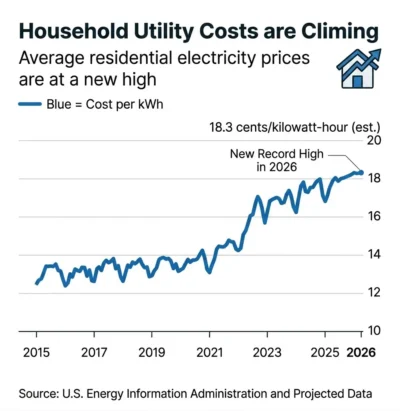 When evaluating SEER2 and AFUE ratings, your geographic location dictates which metric deserves the highest priority in your financial planning. Homes located in northern maritime regions experience distinct, four-season weather patterns marked by freezing winter conditions and hot, humid summer spells. Because heating seasons in these areas extend across several months while intense summer cooling demands are concentrated into shorter stretches, fuel consumption for heating often represents a larger share of annual energy expenses than summer electrical usage.
Because heating demands dominate annual utility usage, securing a system with a high AFUE rating or investing in high-performance heat pump installation provides an exceptional return on investment. Modern cold-climate heat pumps feature impressive heating seasonal performance factors while delivering cooling ratings up to 20+ SEER2. These dual-fuel and all-electric systems allow homeowners to shift away from costly heating oil or propane, relying on inverter-driven heat transfer technology to warm their living spaces efficiently even when outside temperatures drop below freezing.
Local electricity and fuel pricing structures also shorten the payback period for high-efficiency HVAC units. When local utility rates exceed national averages, every fraction of a kilowatt-hour saved yields greater monetary savings. High SEER2 and AFUE ratings serve as a financial hedge against future utility rate hikes. When utility prices increase, homeowners operating high-efficiency systems experience a smaller dollar-amount increase in their monthly bills compared to neighbors running low-efficiency equipment.
Beyond the Ratings: Additional Factors That Determine Real-World Efficiency
While SEER2 and AFUE ratings provide accurate benchmark comparisons between different equipment models, a rating badge on a cabinet represents laboratory performance under optimal conditions. Real-world system efficiency depends heavily on the physical environment in which the equipment operates. Even a top-tier 20 SEER2 air conditioner or 98% AFUE furnace will fail to deliver its promised energy savings if installed alongside compromised ductwork, inadequate structural insulation, or restricted airflow pathways.
Ductwork integrity is arguably the most critical factor influencing real-world efficiency. The U.S. Department of Energy estimates that the average central duct system loses 20% to 30% of its conditioned air through unsealed joints, disconnected runs, and uninsulated ducting passing through cold attics or basements. If your newly installed 96% AFUE furnace loses a quarter of its heated air into an unconditioned attic space, its effective operational efficiency drops significantly. Ensuring your installation includes duct inspection, sealing, and balancing guarantees that the energy produced by your high-efficiency unit reaches your living quarters intact.
System sizing and installation technique play an equally decisive role in performance. An oversized cooling unit will cool the interior air too quickly without running long enough to strip humidity out of the air, leaving your home feeling clammy and prompting you to lower the thermostat setting even further. Professional sizing calculations evaluate wall insulation levels, window orientation, ceiling height, and local thermal patterns to determine the precise equipment capacity required. Proper refrigerant charging, airflow calibration, and system commissioning ensure that your unit operates precisely at its tested SEER2 and AFUE ratings from day one.
Utility Rebates, Tax Credits, and Return on Investment
To accelerate the adoption of clean energy technologies and lower grid demand during peak periods, federal agencies and state utility programs offer significant financial incentives for installing high-efficiency equipment. These incentives drastically lower the upfront cost barrier, making high-SEER2 and high-AFUE equipment accessible to a wider range of homeowners. Understanding how these financial programs work allows you to evaluate equipment quotes based on net investment costs rather than gross sticker prices.
Under the Inflation Reduction Act, federal energy efficiency tax credits allow qualifying homeowners to claim substantial tax credits for eligible HVAC upgrades. High-efficiency heat pumps, advanced central air conditioners, and premium gas furnaces that meet specific SEER2 and AFUE thresholds qualify for direct tax savings. In addition to federal tax incentives, regional energy efficiency programs offer substantial cash-back rebates for installing qualifying equipment. These combined financial incentives can shave thousands of dollars off total project costs, dramatically accelerating your break-even timeline.
When calculating your true return on investment, combine federal tax credits, regional utility rebates, and estimated monthly energy savings over a five to ten-year window. In many cases, the net cost of installing an 18 SEER2 / 96% AFUE system after rebates is nearly identical to the cost of a baseline 13.4 SEER2 / 80% AFUE system, while the high-efficiency unit continues to deliver monthly energy savings for its entire lifetime. Protecting your investment through regular maintenance and timely AC repair ensures that these efficiency gains remain consistent year after year without unexpected component degradation.
Questions to Ask Your Contractor Before Getting a Quote
Armed with a thorough understanding of SEER2 and AFUE ratings, you can approach HVAC contractors as an informed buyer. Rather than asking for a generic price estimate, guide the conversation toward system design, energy modeling, and long-term operating costs. Asking targeted technical questions ensures that prospective contractors evaluate your home holistically rather than simply swapping out old machinery for an equivalent baseline model.
Before signing an agreement or accepting a project proposal, ask your prospective installation team the following essential questions:
-
Will you perform a detailed load calculation to determine the exact heating and cooling capacity my home requires, or are you sizing the new system based on the old unit?
-
What specific SEER2 and AFUE ratings do you recommend for my home’s square footage, layout, and current insulation levels, and what is the projected payback timeline?
-
How will the proposed system integrate with my existing ductwork, and will you test static pressure levels to ensure the equipment reaches its full SEER2 potential?
-
Which federal tax credits and local utility rebates apply to the specific equipment models listed in your quote, and will your team assist with the application paperwork?
-
What ongoing preventative maintenance schedules do you recommend, and how does your team handle long-term warranty coverage to protect system efficiency?
A reputable contractor will welcome these questions and take the time to explain how different equipment choices impact your comfort and monthly expenses. Investing time upfront to understand these efficiency benchmarks guarantees that when you schedule professional HVAC system services, you select a system engineered to deliver superior indoor comfort, long-term mechanical reliability, and predictable, low energy bills for years to come.
Ready to optimize your home’s energy efficiency and start saving on your monthly utility bills? Contact our team at Climate Care today to schedule an in-home evaluation, explore your high-efficiency SEER2 and AFUE rating options, and receive a customized, transparent quote tailored to your heating and cooling needs.