

5 Reasons Your AC is Blowing Warm Air (And 3 You Can Fix)
As the humidity begins to settle over Connecticut, the last thing any homeowner wants to experience is the sudden realization that their air conditioning system is merely circulating lukewarm air. It is a frustrating moment that usually happens right when you need relief the most. Understanding the mechanics of your cooling system is the first step in ensuring your home remains a sanctuary during the peak of summer. While some technical malfunctions require the expertise of a licensed professional, several common issues can be addressed with a bit of proactive maintenance. Preparing your system now prevents the inevitable stress of an emergency breakdown during a heatwave.
The Anatomy of Cool Air
To understand why your system might be failing, it is essential to recognize that an air conditioner does not actually create cold air. Instead, it removes heat from the interior of your home and transfers it outside. This process relies on a delicate balance of airflow, refrigerant pressure, and electrical communication. Whether you have a traditional central unit or require expert heat pump repair, when any part of this cycle is interrupted, the result is often a unit that runs constantly but fails to lower the temperature. By identifying the root cause of warm air, you can determine whether you are facing a simple weekend DIY task or a more complex mechanical failure that necessitates a service call.
Reason 1: The Thermostat Settings
 The most common and often overlooked reason for warm air is a simple setting error on the thermostat. It sounds elementary, but thermostats are frequently bumped or adjusted by different household members. If your thermostat is set to “On” rather than “Auto,” the fan will blow continuously even when the cooling cycle is not active. This means that during the intervals between cooling cycles, the system is simply pushing room-temperature air through your vents. Ensuring your system is set to “Auto” ensures that air only moves when it is actually being chilled. Additionally, check that the cooling mode is engaged and the temperature is set lower than the current room temperature.
Reason 2: Dirty Evaporator Coils
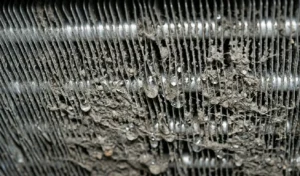 While a dirty filter is a common culprit, the problem often lies deeper within your system. If you find yourself replacing filters more often than usual, it’s a sign that your home’s ‘lungs’ are congested. This is when professional duct cleaning in Fairfield County becomes essential. By removing years of built-up debris and coastal contaminants from your ductwork, you allow your AC to breathe freely, ensuring that cold air actually reaches your living spaces instead of being trapped behind a wall of dust.
Reason 3: Frozen Cooling Lines
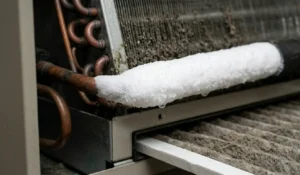 It may seem counterintuitive, but an air conditioner that is blowing warm air might actually be frozen solid. When airflow is restricted or refrigerant levels are low, the evaporator coil can drop below freezing temperatures. Moisture in the air then condenses and freezes onto the coils, eventually creating a block of ice that prevents any heat absorption. If you notice ice buildup on the copper refrigerant lines leading to your outdoor unit, you should turn the system off immediately. Running a frozen system can cause significant damage to the compressor, which is the most expensive component to replace. Allowing the ice to melt completely is the first step before investigating the underlying cause of the freeze.
Reason 4: Refrigerant Leaks
 Refrigerant is the lifeblood of your AC system. Unlike gas in a car, refrigerant is not “used up” over time; it circulates in a closed loop. If your system is low on refrigerant, it almost certainly means there is a leak somewhere in the lines or coils. Low refrigerant levels mean the system cannot absorb enough heat to cool the air effectively. Signs of a leak include a hissing or bubbling noise near the unit or the presence of ice on the lines. Because refrigerant handling requires specific certifications and specialized tools to locate and seal leaks, this is a scenario where you should contact a technician for professional AC repair in Connecticut to restore the system to its proper operating pressure
Reason 5: A Malfunctioning Outdoor Compressor

The outdoor unit, or condenser, is responsible for releasing the heat collected from inside your home. If the compressor—the engine of the unit—fails to start, the indoor fan will still blow air, but it will not be cooled. This can be caused by a variety of issues, including a failed capacitor, a tripped circuit breaker, or aged electrical components. If you hear the indoor unit running but the outdoor fan is stationary or the compressor is making a loud humming sound without starting, the system is unable to complete the cooling cycle.
Timely intervention here is critical to prevent a total system failure. However, if your unit is more than a decade old, a major compressor failure is often the sign that it is time to consider an energy-efficient AC installation. Modern systems provide significantly better cooling performance while drastically lowering your monthly utility costs compared to older, struggling units.
Three Fixes You Can Handle Today
While mechanical repairs should be left to the experts, there are three primary maintenance tasks that every homeowner should perform to keep their AC blowing cold.
First, replace your air filters. This is the single most effective way to maintain system health. A clogged filter restricts airflow, which leads to the freezing issues mentioned earlier and forces your system to work much harder than necessary. Check your filters every thirty days during the cooling season and replace them if they appear grey or dusty.
Second, clear the area around your outdoor condenser. Your outdoor unit needs “room to breathe” to dissipate heat effectively. Ensure there is at least two feet of clearance around the unit. Remove tall grass, weeds, fallen leaves, or any decorative covers that might be obstructing the fins. If the condenser is crowded, the heat has nowhere to go, and your AC will struggle to keep the indoors cool.
Third, inspect your ductwork and vents. Ensure that all supply and return vents are open and unobstructed by furniture or curtains. Blocking vents creates pressure imbalances that can cause the system to underperform. Additionally, look for visible gaps or leaks in accessible ductwork in attics or basements. Sealing these gaps with foil tape can ensure that the cold air actually reaches your living spaces rather than escaping into your walls.
Taking these steps now ensures your home remains comfortable throughout the coming months. A little preparation goes a long way in extending the life of your equipment and keeping the warm air outside where it belongs. However, if you’ve tried the DIY fixes and your home is still heating up, don’t wait for a total breakdown. Our team provides reliable HVAC services in New Canaan and throughout the surrounding area. Contact us today to get your cooling system back on track and enjoy a worry-free summer.”