

The Ultimate Spring AC Preparation Checklist for Lower Fairfield County Homeowners

Spring in New England brings blooming dogwoods, warmer coastal breezes, and the subtle reminder that summer heat is right around the corner. Executing a comprehensive Spring AC Preparation Lower Fairfield County routine is essential for homeowners from Stamford to Westport to ensure their cooling systems are primed for peak efficiency. After months of sitting dormant through damp winter freezes and early spring thaws, your air conditioner requires targeted care to shed debris, restore lost efficiency, and prevent sudden mid-summer breakdowns.
By taking proactive steps early in the season, you protect your indoor comfort, lower monthly utility expenses, and avoid expensive emergency service calls when the humidity arrives.
Why Spring AC Preparation Matters in Lower Fairfield County
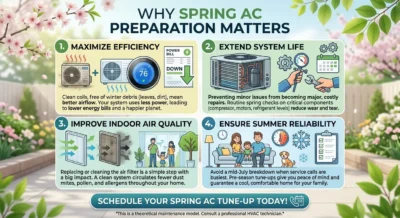 Living along the Long Island Sound presents unique challenges for residential heating, ventilation, and air conditioning systems. The microclimate of Lower Fairfield County subjects home equipment to harsh salt air, thick pollen heavy spring blossoms, and rapid shifts between crisp mornings and humid afternoons.
-
High Salt Air Corrosion: Coastal properties in Old Greenwich, Rowayton, and Darien face airborne salt deposits that degrade delicate condenser fins and accelerate electrical terminal oxidation.
-
Heavy Spring Pollen Loads: The region’s dense oak, maple, and pine tree canopy releases dense pollen counts that quickly clog outdoor units, restricting essential airflow.
-
Extreme Humidity Spikes: Early summer heatwaves pull damp, humid air off the Sound, forcing your system to work doubly hard at moisture removal and temperature regulation.
-
Pest Intrusions: Rodents and insects seeking shelter during winter often build nests inside outdoor electrical cabinets or chew through wires, creating hidden fire hazards.
Preparing your system early allows you to catch minor wear and tear before it escalates into a complete compressor failure. To learn more about customized local care, review our specialized coverage for AC Repair & Maintenance Greenwich CT.
The Ultimate DIY Spring AC Checklist for Homeowners
 While technical mechanical adjustments require a certified technician, homeowners can perform several vital baseline maintenance checks. Complete these tasks before powering up your system for the season.
1. Clear the Outdoor Condenser Surroundings
Winter storms and falling branches accumulate around your outdoor unit. Your AC condenser relies on unobstructed air intake to dissipate heat removed from your home interior.
-
Maintain Clearance: Clear away leaves, sticks, weeds, and mulch to maintain a minimum two-foot buffer around the entire unit.
-
Trim Overhanging Foliage: Cut back low-hanging branches and shrubs to prevent leaves from dropping straight into the top fan grill.
-
Inspect the Housing: Look inside the top grill using a flashlight to check for animal nests, leaves, or packed pine needles. Never stick objects through the metal guard while the unit is connected to power.
2. Inspect, Clean, or Replace Air Filters
Air filters act as the first line of defense for indoor air quality and internal mechanical protection. A restricted filter forces the blower motor to pull extra wattage, leading to uneven cooling and frozen evaporator coils.
-
Check Monthly: Inspect filters every 30 days during spring and summer, particularly if you have pets or allergies.
-
Upgrade MERV Ratings: Use high-efficiency pleated filters rated MERV 8 to MERV 11 to trap pollen and micro-particulates without suffocating system airflow.
-
Verify Airflow Direction: Ensure arrow markings on the filter frame match the directional airflow toward the air handler cabinet.
3. Check and Upgrade Thermostat Controls
Your thermostat serves as the command center for your entire cooling setup. Outdated control interfaces waste hundreds of dollars annually in unnecessary run time.
-
Test System Switching: Switch your thermostat from “Heat” to “Cool” and set the target temperature three degrees below current room ambient. Listen for fan motor activation.
-
Replace Batteries: Insert fresh AA or AAA alkaline batteries into non-hardwired units to prevent control dropping mid-season.
-
Consider Smart Upgrades: Upgrade to programmable or Wi-Fi smart thermostats that adjust cooling automatically based on your daily schedule. For energy management advice, read our guide on the Best Thermostat Settings for Comfort & Savings in Fairfield County.
4. Inspect Condensate Drain Lines and Pans
When air conditioning units remove humidity, they generate significant condensation. Blocking this drainage pathway leads to water leaks, ceiling damage, and localized mold growth.
-
Locate the Drain Line: Find the PVC drain line emerging from your indoor furnace or air handler.
-
Flush with Vinegar: Pour a cup of distilled white vinegar down the condensate T-pipe access point to eliminate algae, sludge, and bacterial buildup.
-
Check Drain Pan Integrity: Inspect the emergency drain pan beneath attic or upper-floor units for rust, cracks, or standing water.
5. Check Supply Vents and Return Grilles
Effortless cooling demands uninhibited air circulation through every square foot of your living space.
-
Unblock Registers: Ensure furniture, rugs, and drapes do not block supply registers or large return air grilles.
-
Clean Grille Covers: Wipe dust, cobwebs, and pet dander off return vent covers using a damp microfiber cloth or vacuum brush attachment.
-
Keep Vents Open: Avoid closing supply registers in unused rooms; closing vents increases static duct pressure, straining the blower fan and risking duct leakage.
What Professional Technicians Inspect During a Spring Tune-Up
While DIY steps keep basic airflow paths clean, modern cooling systems are complex electrical and refrigeration machines. Essential technical checks require professional diagnostic instruments.
| Maintenance Task | DIY Safety Level | Professional Tool Required | Primary Functional Benefit |
| Clear Yard Debris | Safe for Homeowners | Garden Shears & Rake | Maintains initial external airflow clearance |
| Replace Air Filter | Safe for Homeowners | Replacement Filter | Prevents coil freezing and protects motor |
| Refrigerant Check | Certified Tech Only | Digital Manifold Gauges | Pinpoints leaks and ensures proper pressures |
| Electrical Amperage | Certified Tech Only | Amp Clamp & Multimeter | Detects failing capacitors and wiring shorts |
| Coil Chemical Scrub | Certified Tech Only | Non-acidic Foaming Cleaner | Restores heat transfer and lowers energy draw |
A certified specialist completes crucial technical tasks during a comprehensive spring inspection:
 Precision Refrigerant Charge Diagnostics
Improper refrigerant levels compromise cooling output and can ruin the compressor—the most expensive part of your unit. Technicians attach digital manifolds to measure superheat and subcooling levels precisely, identifying micro-leaks before system pressure drops completely.
Electrical System and Run Capacitor Testing
Loose electrical connections and degraded capacitors cause the vast majority of sudden summer breakdowns. Technician
s tighten wire terminals, inspect contactor surfaces for pitting, and measure capacitor microfarad ratings to ensure reliable compressor start-ups.
Deep Evaporator and Condenser Coil Cleaning
Over time, fine dust, pollen, and salt film coat metal heat transfer fins. Technicians apply specialized, non-acidic foaming cleansers that dissolve baked-on grime without damaging aluminum fins, instantly restoring seasonal energy efficiency ratings.
For home inspections in coastal communities, see our dedicated page for AC Repair & Maintenance Darien CT.
Comparative Analysis: Seasonal Plan vs. Pay-As-You-Go Service
Many homeowners debate whether to enroll in an ongoing maintenance agreement or simply call for repairs when something breaks. Comparing long-term benefits shows why proactive service delivers greater savings, performance, and peace of mind.
| Feature / Benefit | Pay-As-You-Go Repair Calls | Seasonal Maintenance Plan |
| Emergency Priority | Standard queue wait times (up to 48+ hours) | Priority response times during heatwaves |
| Seasonal Tune-Ups | Billed separately each visit ($150–$250+) | Included annually for heating and cooling |
| Repair Discounts | Full price for parts and labor | 10%–15% discount on all necessary repairs |
| Equipment Longevity | Reduced (10–12 years due to wear strain) | Maximized (15–20 years with continuous care) |
| Utility Costs | Gradually increases as dirt builds up | Kept at optimal factory performance levels |
| Warranty Compliance | Risks voiding manufacturer parts coverage | Fully satisfies required maintenance proof |
Avoid Costly Breakdowns: Join the Climate Care Seasonal Plan
Skipping routine spring tune-ups leaves your system vulnerable to total failure during July and August heatwaves. Neglected equipment consumes significantly more electricity, struggles to extract humidity, and experiences premature mechanical wear.
When you enroll in a seasonal maintenance plan, you transfer the stress of HVAC upkeep to licensed local professionals.
-
Guaranteed Precision Inspections: Automated bi-annual scheduling ensures your system is serviced every spring and fall.
-
Priority Service Scheduling: Jump to the front of the line during high-demand summer heatwaves.
-
Discounted Parts and Labor: Receive member discounts on any technical repairs identified during maintenance inspections.
-
Lower Monthly Energy Bills: Clean, balanced systems run shorter cooling cycles, keeping utility charges low all summer.
Protect your home comfort before hot weather arrives. Explore our full range of options on the main Trusted HVAC Services in Fairfield County CT page, or review specialized community support like our AC Repair & Maintenance Wilton CT service.
Frequently Asked Questions
When should I schedule my spring AC tune-up in Connecticut?
Schedule your professional spring AC tune-up between late March and early May. Servicing your unit before warm weather arrives guarantees peak performance before the summer rush.
Can I run my air conditioner if the outdoor temperature is below 60°F?
No, avoid running your air conditioner when ambient outside temperatures fall below 60°F. Operating the compressor in low temperatures can cause internal lubricant thickening, frozen coils, and permanent mechanical damage.
How often should I replace my air filter during peak summer?
Check your air filter every 30 days. Replace it every 30 to 60 days depending on home size, pet ownership, indoor humidity, and local air quality conditions.
Does a seasonal maintenance plan really lower monthly electric bills?
Yes. Clean coils, proper refrigerant charges, well-calibrated thermostats, and clear air filters allow your AC unit to transfer heat efficiently. A well-maintained system can reduce seasonal cooling energy consumption by 15% to 25%.
Take action before the summer humidity sets in across Lower Fairfield County. Contact Climate Care at (203) 354-2020 or visit Climate Care CT to schedule your spring tune-up and lock in recurring maintenance plan protection.