

Why Your Fairfield County Home Won’t Heat Past 71? Dealing with Extreme Cold Weather
You Keep Pushing Your Thermostat Up, But Your House Won’t Get Warm, Why?
When temperatures drop below 20 degrees and stay there for days, homes across Greenwich, Westport, North Stamford, and Norwalk often struggle to reach the temperature on the thermostat. You might find yourself asking, “Won’t my house heat past 71?” even if your system is set to 72 or 73. If the house feels stuck at 68 or 69, that’s not always a broken furnace or boiler. During extreme cold like what we’re experiencing now, many heating systems are running continuously just to maintain whatever temperature they can hold. The gap between what your thermostat says and what your house feels like comes down to heat loss, system capacity, home construction, and how fast cold air is pulling warmth out through walls, windows, and attic spaces.
Understanding Heating Capacity vs. Heat Loss in Fairfield County Homes
Your heating system was sized to keep your home comfortable during typical Connecticut winter conditions, usually calculated around outdoor temperatures in the teens. When it drops to single digits or below zero with sustained wind, especially the kind of coastal wind we get off Long Island Sound, the rate of heat loss through your home’s envelope can exceed what your furnace or boiler was designed to replace. This is particularly true in older homes built between the 1920s and 1960s, which make up a large portion of the housing stock in these towns. A colonial in Riverside or a cape in Rowayton might have been insulated when it was built, or insulation might have been added during a renovation in the 1980s, but it’s rarely up to current standards. That doesn’t mean the system is broken. It means the system is working at full capacity while the house is losing heat faster than it can be replaced.
If you’re concerned about whether your heating system is adequately sized for your home, Climate Care can perform a heat load calculation and system evaluation.
Every home heats differently based on age, construction, and location. If your Greenwich or Westport home consistently struggles during cold weather, we can help identify whether the issue is your system, your home’s envelope, or both. Call (203) 354-2020 for a consultation.
How Different Home Types in This Area Respond to Extreme Cold
The way your home heats during severe weather depends heavily on when it was built and how it’s constructed. Older colonials and Tudor-style homes in Greenwich’s Belle Haven or New Canaan’s Silvermine often have beautiful architectural details but inconsistent insulation. These homes were built during an era when heating oil was cheap and insulation standards didn’t exist. Many have been updated over the years, but it’s common to find original windows, uninsulated exterior walls, or attic spaces with only a few inches of blown-in cellulose.
Larger estate homes in the Back Country or along Oenoke Ridge present a different challenge. These properties often have long duct runs, multiple heating zones, and rooms added over time. A furnace that worked fine when the house was 4,000 square feet might struggle now that it’s 6,500 square feet. High ceilings and open floor plans, while visually stunning, create massive volumes of air that need constant heating during cold snaps.
Coastal homes in Old Greenwich, Compo Beach, or Tokeneke deal with wind exposure that inland properties don’t face. Wind doesn’t just make it feel colder outside. It drives cold air through every gap in your home’s exterior, around window frames, through soffit vents, and up through basement rim joists. A 20-degree day with 25 mile per hour winds off the Sound creates far more heat loss than a calm 20-degree day in North Stamford.
Ranch and split-level homes built in the 1950s and 1960s across Noroton Heights, South Wilton, and Glenbrook often have good bones but minimal insulation in exterior walls. These homes typically have forced air systems, and if the ductwork runs through an unheated attic or crawl space, you’re losing heat before it even reaches the living space.
How Gas Furnaces, Oil Boilers, and Heat Pumps Perform in Severe Cold
The type of heating system you have determines how it responds when temperatures stay in the single digits for days. Gas furnaces are common in newer construction and renovated homes throughout Fairfield County. A properly maintained furnace will keep running during extreme cold, but its ability to heat your home depends on whether it was sized correctly and whether your ductwork is sealed and insulated. Furnaces cycle on and off under normal conditions, but during severe cold, you’ll notice they run almost continuously. That’s normal. The system is doing exactly what it should, working hard to maintain whatever temperature it can hold against sustained heat loss.
Oil boilers are still common in older homes across this region, particularly in Southport, Rowayton, and parts of Darien. Boilers heat water and send it through radiators or baseboard units. They’re reliable and provide consistent heat, but they’re limited by the size of the boiler and the amount of radiation installed in each room. If your home was originally designed with cast iron radiators and those were later replaced with smaller baseboard units during a renovation, you might not have enough radiating surface to heat the space adequately during extreme cold. The boiler itself might be fine, but the delivery system can’t keep up.
Heat pumps, including dual-fuel systems that switch between electric heat pump operation and gas furnace backup, have become more popular in recent years. Modern cold-climate heat pumps can operate effectively down to around 5 degrees, but their efficiency drops as temperature falls. Below 15 degrees, most heat pumps work significantly harder and produce less heat. If you have a heat pump without auxiliary heat or backup, you’ll notice reduced performance during cold snaps like this. Dual-fuel systems should automatically switch to gas when outdoor temperatures drop below a set point, usually around 25 to 30 degrees. If your system isn’t switching over, that’s something to check.
Older heating systems that have been in service for 20 or 30 years can still work well if they’ve been maintained, but they often lack the efficiency and capacity of newer equipment. A furnace or boiler that’s been running since the 1990s might be oversized by old standards but undersized by current heating load calculations, especially if the home has been expanded or if air sealing and insulation were never upgraded.
Not sure if your heating system is performing as it should? Our technicians service all types of heating equipment throughout Fairfield County. Call Climate Care at (203) 354-2020 for expert heating repair diagnosis and repair.
Why the Number on Your Thermostat Doesn’t Guarantee Comfort
Homeowners often assume that setting the thermostat to 72 degrees means the house will reach and hold 72 degrees. That’s true under normal conditions, but not during extreme cold. Your thermostat measures air temperature at one specific location, usually a central hallway or living room. It doesn’t measure heat loss, drafts, wind infiltration, or the temperature difference between your warmest and coldest rooms.
When outdoor temperatures drop below 10 degrees, especially with wind, heat loss accelerates. Warmth moves from hot to cold, and the greater the temperature difference between inside and outside, the faster that movement happens. A 70-degree indoor temperature with 15-degree outdoor temperature creates a 55-degree difference. When it drops to zero outside, that difference becomes 70 degrees, and heat loss nearly doubles. Your heating system is still producing the same amount of heat, but your home is losing it faster.
Infiltration plays a major role. Cold air leaks in around windows, doors, electrical outlets, recessed lights, and anywhere the building envelope isn’t perfectly sealed. Warm air leaks out through the attic, around the band joist in the basement, and through gaps in the structure you can’t see. This constant exchange of air means your heating system isn’t just warming the air in your home, it’s also warming the cold air that’s continuously seeping in from outside.
System capacity also matters. Heating systems are rated in BTUs, which measure heat output. If your system produces 80,000 BTUs per hour and your home is losing 85,000 BTUs per hour during extreme cold, the math doesn’t work. The system will run continuously and still fall short. This isn’t a malfunction. It’s physics.
Recovery time becomes an issue when thermostats are set back at night or during the day. If you normally keep the house at 68 and bump it up to 72 when you get home, the system might recover that temperature in an hour under normal conditions. During extreme cold, recovery can take three or four hours, or the system might not recover at all while outdoor temperatures remain severe.
What Homeowners Can Safely Check Before Calling for Service
There are several things you can check on your own that might improve heating performance without requiring a service call. Start with your air filter. A clogged filter restricts airflow, which reduces heating capacity and forces the system to work harder. If you haven’t changed the filter in the last month, replace it now. During periods of continuous operation, filters load up faster than usual.
Check all your supply vents and return grilles. Make sure furniture, curtains, or storage items aren’t blocking airflow. In homes with forced air systems, blocked returns are particularly problematic because they starve the system of air to heat and circulate. Walk through each room and confirm that heat is actually coming out of the vents. If one room is significantly colder than others, check whether that zone’s damper is open or whether the vent was accidentally closed.
Look at your thermostat settings. Make sure it’s set to heat mode, not auto or emergency heat unless you have a heat pump system with a specific reason to use emergency heat. Check the temperature setting and confirm the thermostat is calling for heat. Most thermostats have an indicator light or display message showing when the system should be running. If the thermostat says the system should be on but you don’t hear or feel anything, that’s a problem requiring professional help.
If you have a programmable or smart thermostat, disable any setback schedules during extreme cold. Let the system run at a constant temperature rather than trying to recover from a nighttime setback. This reduces strain on the system and often results in better overall comfort.
Check for visible ice or snow blocking outdoor equipment. If you have a furnace or boiler with an outdoor combustion air intake, make sure it’s clear of snow and ice. If you have a heat pump, check the outdoor unit. A heat pump covered in ice or snow can’t operate properly. You can carefully brush snow off the unit, but don’t try to chip away ice or use hot water, which can damage components.
Look at your circuit breaker panel. Make sure the breaker for your heating system hasn’t tripped. Also check that your fuel supply is adequate. If you heat with oil, verify you have fuel in the tank. If you’re on propane, confirm the tank isn’t empty or frozen.
Do not attempt to open the furnace or boiler cabinet, adjust burner settings, override safety controls, or work on any electrical or gas components. Those are jobs for a licensed professional. If you’re not comfortable checking filters or vents, or if anything seems unsafe, call for service rather than attempting diagnostics on your own.
When Cold Weather Heating Problems Require Professional Service
Some situations require professional help regardless of what you check on your own. If your system isn’t running at all, that’s an immediate service call. No heat during extreme cold is an emergency, especially if you have young children, elderly family members, or anyone with health conditions in the home.
If the system runs but produces no heat or very little heat, that’s also a service call.
Furnaces that blow cold air, boilers that circulate water but don’t heat it, or heat pumps stuck in defrost mode all need professional diagnosis. These aren’t things you can troubleshoot safely from the homeowner side.
Strange noises that weren’t present before the cold snap can indicate problems. Grinding, squealing, banging, or rattling sounds often mean something is wrong with a blower motor, inducer fan, circulator pump, or other mechanical component. Systems working hard during extreme cold will make more noise than usual, but new or loud unusual sounds warrant a service call.
If you smell gas, leave the house immediately and call the gas company from outside. Don’t try to locate the source, don’t turn lights on or off, and don’t use your cell phone inside the house. Gas leaks are life-threatening and require immediate professional response.
Frequent cycling, where the system turns on and off every few minutes, usually indicates a control problem, limit switch issue, or flame sensor fault. Systems should run in longer cycles during cold weather, not short cycles. Short cycling reduces efficiency and often means something is shutting the system down prematurely.
Visible ice accumulation on indoor components, water leaking from the furnace or boiler, or condensation problems around ductwork or piping all need professional attention. These issues can cause damage beyond just reduced heating and often get worse the longer they’re ignored.
An HVAC professional responding to a cold-weather service call will check several things you can’t safely access. They’ll verify gas pressure or oil pump pressure, check flame characteristics, test safety controls, measure airflow and temperature rise, inspect heat exchangers or boiler sections, check refrigerant levels in heat pump systems, and verify proper venting and combustion air supply. They’ll also evaluate whether the system is adequately sized for the home and whether ductwork or piping is functioning properly. In many cases, the problem isn’t the heating equipment itself but something in the distribution system, the thermostat control, or the home’s construction that’s preventing adequate heat delivery.
How Coastal Weather and Storms Affect Heating Systems in This Region
Living near Long Island Sound means dealing with weather patterns that inland areas don’t experience. Coastal wind increases heat loss dramatically, particularly in homes on exposed lots or near the water. Wind doesn’t just make it feel colder. It drives cold air through gaps in your home’s exterior and pulls warm air out through any opening it can find. Homes in Shippan Point, Rowayton, Compo Beach, or along the Greenwich shoreline face wind exposure that can double or triple the effective heat loss compared to a calm day.
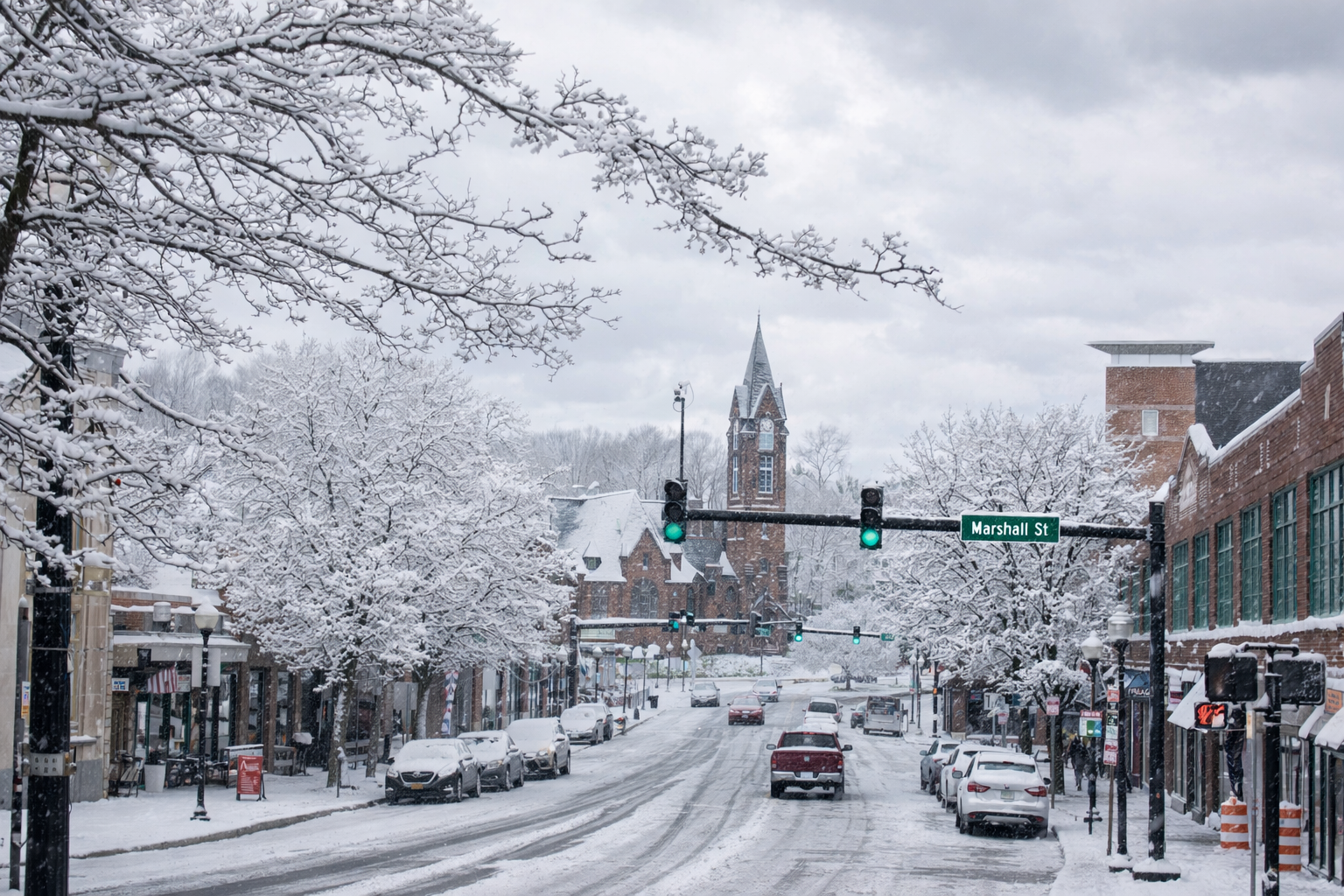
Snow accumulation creates its own problems. Drifting snow can block combustion air intakes, exhaust vents, and outdoor heat pump units. When snow piles up against the foundation, it can block basement window wells where makeup air enters or where exhaust vents terminate. Always check that snow isn’t blocking any part of your heating system’s outdoor components, including the area around your oil tank fill pipe and vent if you have an outdoor tank.
Power interruptions during storms create additional challenges. If power goes out, gas furnaces and oil boilers won’t run even though fuel is available because they need electricity for controls, igniters, and circulator pumps. Heat pumps obviously can’t run without power. Many homeowners in this area have whole-house generators or portable generators for this reason. If you’re running a generator, make sure it’s properly connected and that your heating system is receiving power. Never run a portable generator inside your home, garage, or basement due to carbon monoxide risk.
Frozen pipes can occur during extended cold, particularly in homes where heating is uneven or where pipes run through unheated spaces like crawl spaces, attics, or exterior walls. If your heating system is struggling to keep up and temperatures inside the home drop into the low 60s or below, frozen pipes become a real risk. Cabinet doors under sinks should be left open to allow warm air to reach pipes, and you might need to let faucets drip slightly in vulnerable areas.
Living near the coast means your heating system faces unique challenges. If wind, weather, or salt air is affecting your home’s comfort, we have solutions. Call (203) 354-2020 to discuss your options.
What to Expect When This Cold Snap Ends
When outdoor temperatures moderate and rise back into the 20s and 30s, your heating system should return to normal operation. The thermostat should reach its set point, the system should cycle normally instead of running continuously, and comfort should improve throughout the house. If that doesn’t happen, if the system continues to struggle even when conditions improve, that’s a strong indication something is wrong with the equipment or the home’s heating distribution.
Now is also a good time to think about whether your current system is adequate. If you’re consistently uncomfortable during cold weather, if certain rooms never get warm, or if you’re concerned about the age and reliability of your equipment, scheduling an evaluation after the cold snap makes sense. Heating contractors are busy during extreme cold handling emergency calls. Once temperatures moderate, they have more time for assessments, estimates, and planned replacements.
Consider whether your home’s insulation and air sealing are adequate. Many heating problems aren’t really heating system problems. They’re building envelope problems. No furnace or boiler can overcome poor insulation, drafty windows, or an unsealed attic. If you’re running your system flat out during every cold snap, investing in insulation, air sealing, and window upgrades might provide more comfort and lower operating costs than replacing mechanical equipment.
When to Call a Local HVAC Professional
If your system isn’t heating at all, call now. That’s an emergency regardless of outdoor temperature. If the system is running but you’re concerned about performance, operation, or unusual behavior, calling during extreme cold is appropriate. HVAC contractors in this area understand that cold weather creates urgent situations, and legitimate no-heat or low-heat calls take priority.
For situations where the system is running and producing some heat but the house isn’t reaching the desired temperature, you can often wait until temperatures moderate before scheduling a service call. This allows the contractor to properly evaluate the system under more normal conditions and determine whether what you experienced was a capacity issue during extreme weather or an actual equipment problem.
When you call, be prepared to describe what’s happening in detail. Explain how long the system has been struggling, what temperature the house is reaching versus what the thermostat is set to, whether you’ve checked filters and vents, what type of system you have, and whether you’ve noticed any unusual noises, smells, or behavior. The more information you can provide, the better prepared the technician will be when they arrive.
Expect service calls during extreme cold weather to focus on getting your system operational rather than performing comprehensive diagnostics or maintenance. The priority is restoring heat. Detailed system evaluation, efficiency testing, and recommendations for upgrades typically happen during milder weather when the technician has time to thoroughly assess your equipment and your home’s heating needs.
Common Heating Questions from Fairfield County Homeowners During Extreme Cold
Still have questions about your heating system’s performance? Our team is here to help. Call Climate Care at (203) 354-2020 to speak with an HVAC professional who understands Fairfield County homes.